How a fence job goes
Most fence jobs follow the same four steps, from your first message through the work and hauling off the scraps.
Get a quoteWe build cedar privacy, horizontal, ranch, iron and steel, and chain link fences, along with the gates that go with them. We repair and stain existing fences in Austin and the towns around it in Travis, Williamson, and Hays counties.

We do eight kinds of fence work, from a new cedar fence around your backyard to a gate that won’t latch or a fence that needs stain.
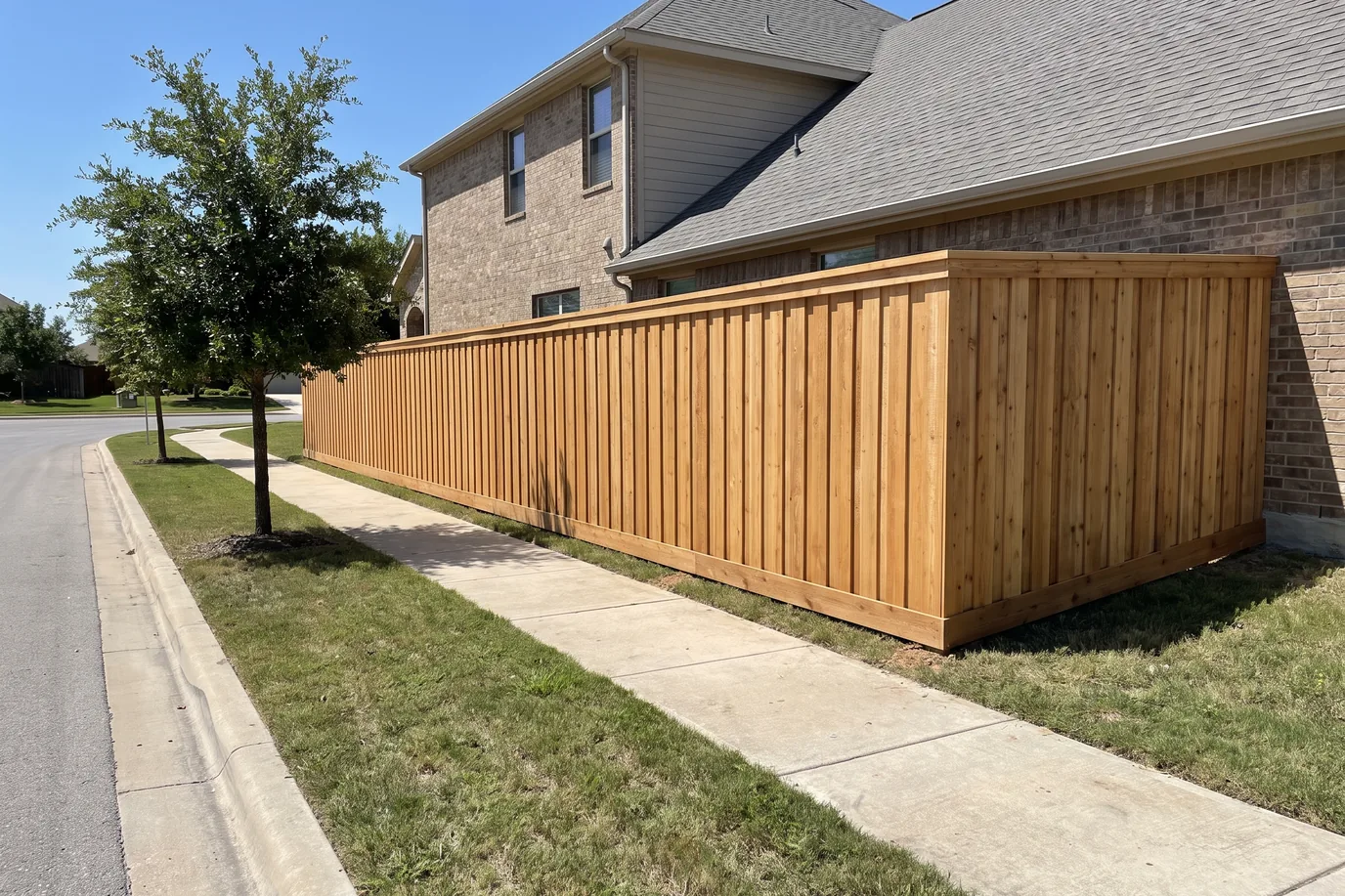
We build cedar privacy fences with cedar pickets on galvanized steel or cedar posts, a kickboard at the bottom, and a cap and trim on top.
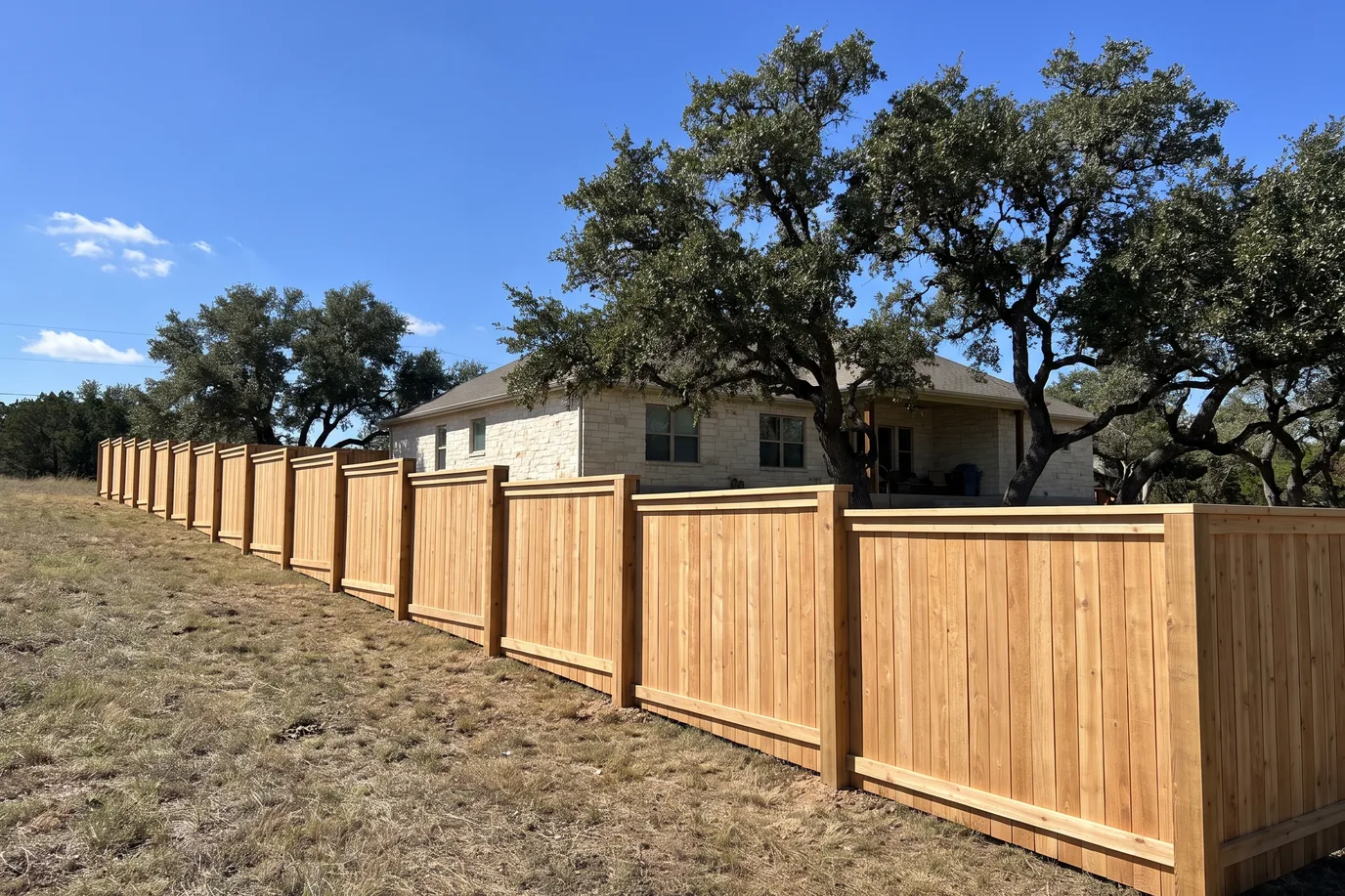
We set level cedar boards between steel or wood posts for modern and Hill Country houses.
Ranch fencing for acreage includes pipe and cable, field and no-climb wire, split rail, and hog wire, with braced corners.
Ornamental steel and iron fences go in front yards and along property lines, and we build metal privacy fences.
Galvanized or black-coated chain link fences work for dogs, side yards, and back property lines.
We build and hang walk gates, double drive gates, and ranch gates to swing and latch, and we repair gates.
We repair leaning posts, broken rails, loose pickets, sagging gates, and storm damage in wood and chain link, and replace sections or whole fences.
We stain and seal new and weathered wood fences to slow the graying caused by the sun.
These four fence styles are common around Austin and the Hill Country, and each fits a different setting.
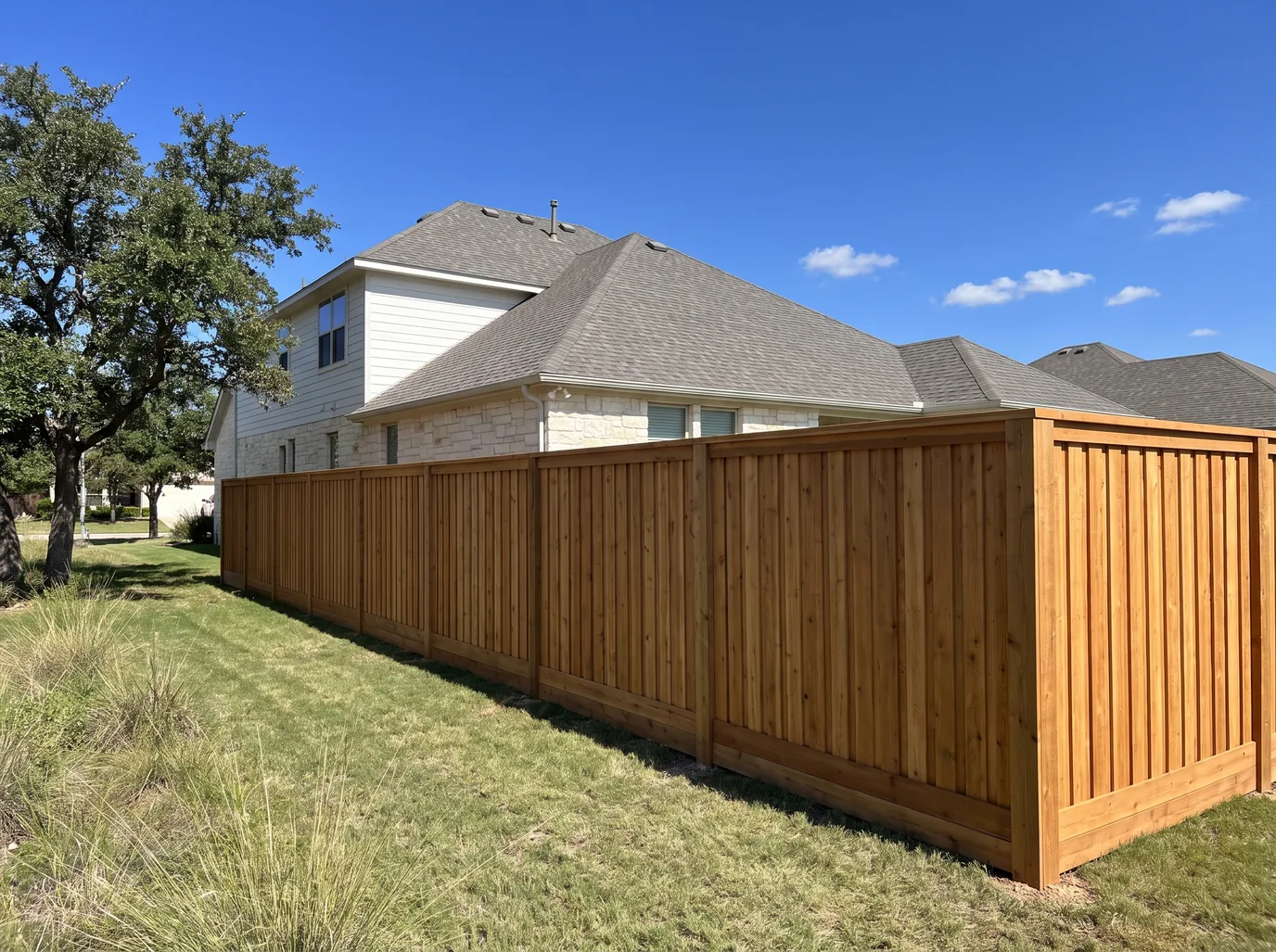
Tight vertical cedar pickets face their finished side out, with posts and rails on your side, a kickboard at the bottom, and cap and trim on top.
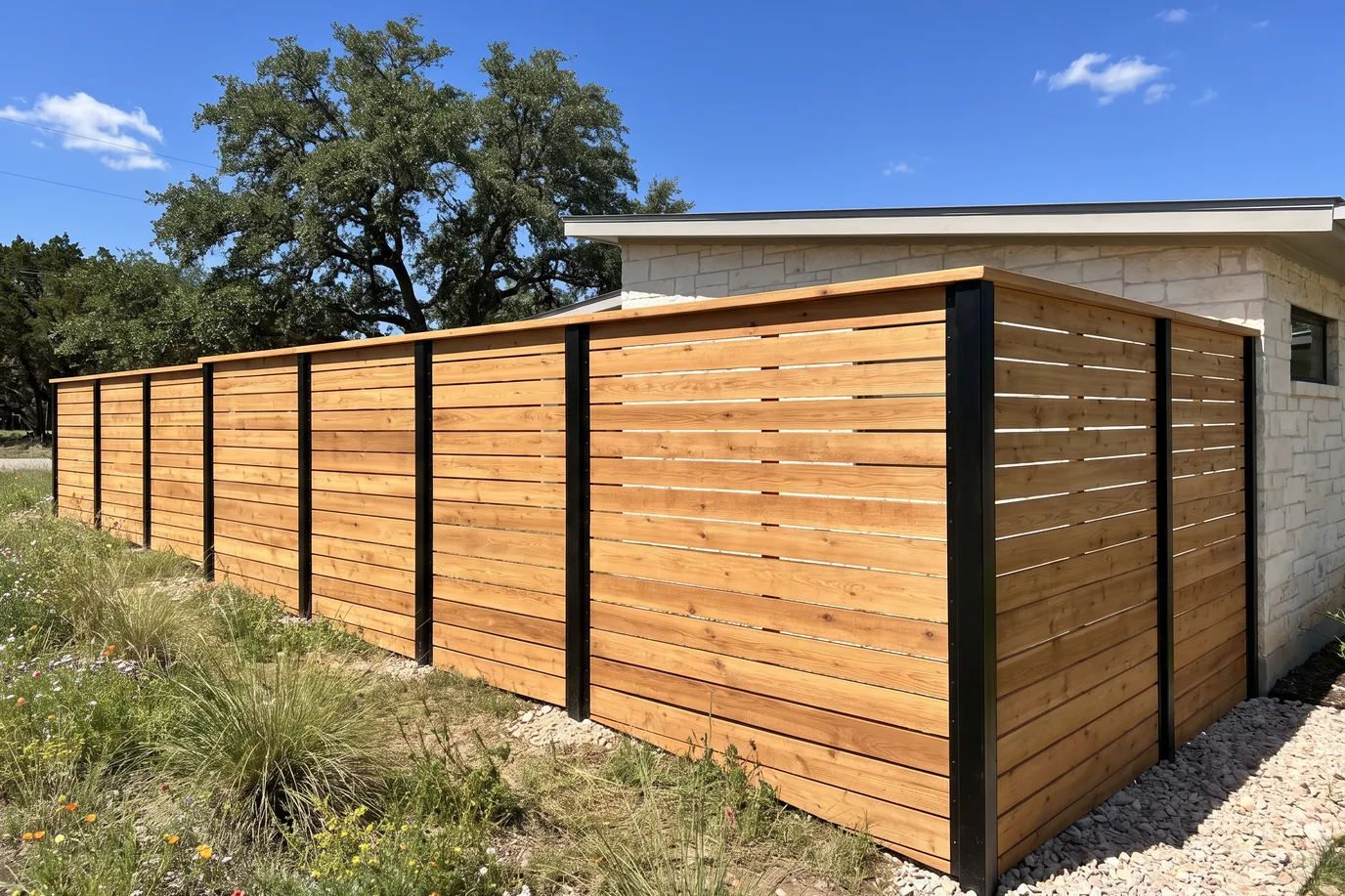
Level cedar boards run between black steel posts and suit modern, farmhouse, and Hill Country houses.
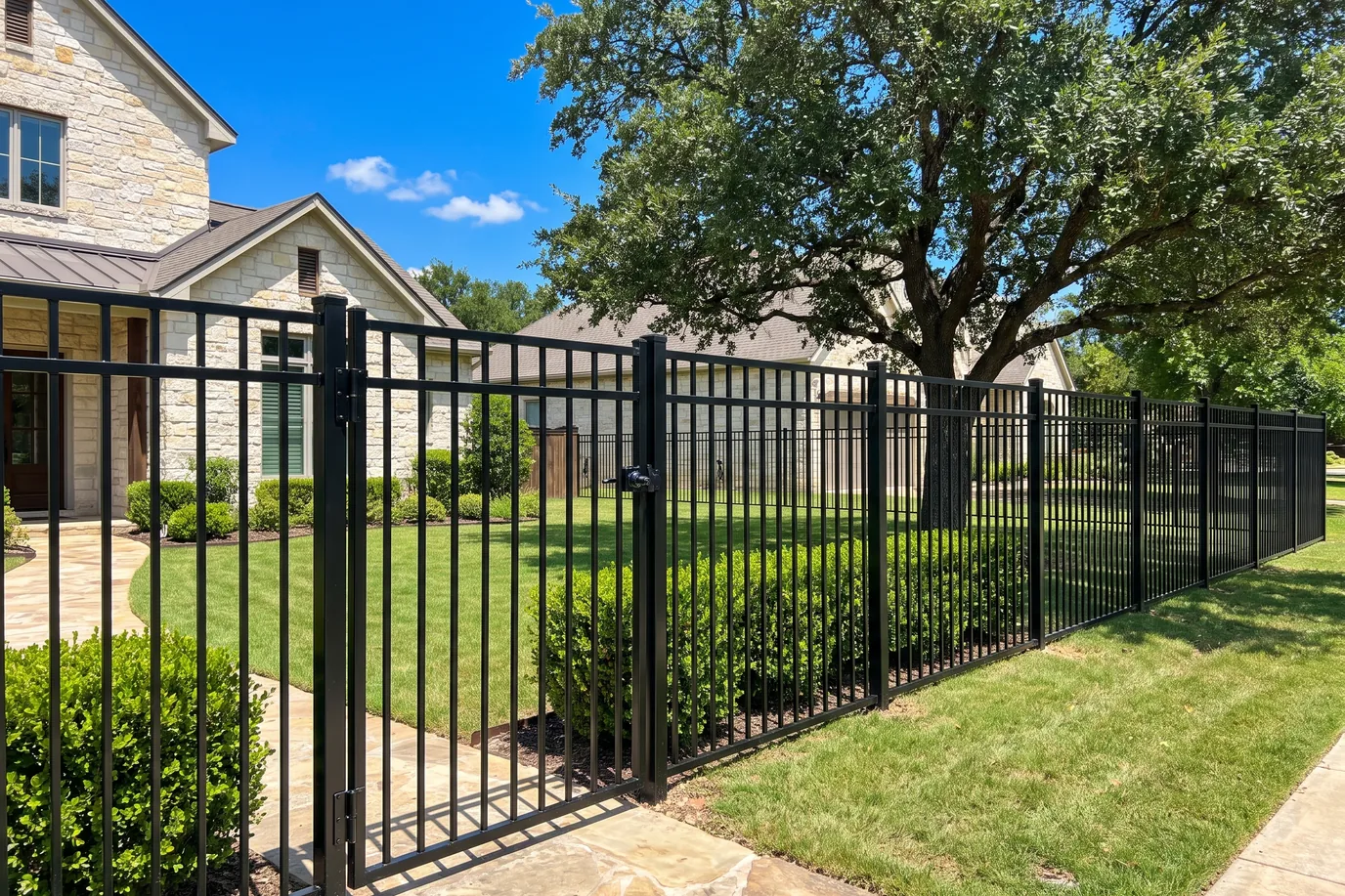
Black steel pickets sit between flat rails, marking a front yard or property line while keeping the view open.
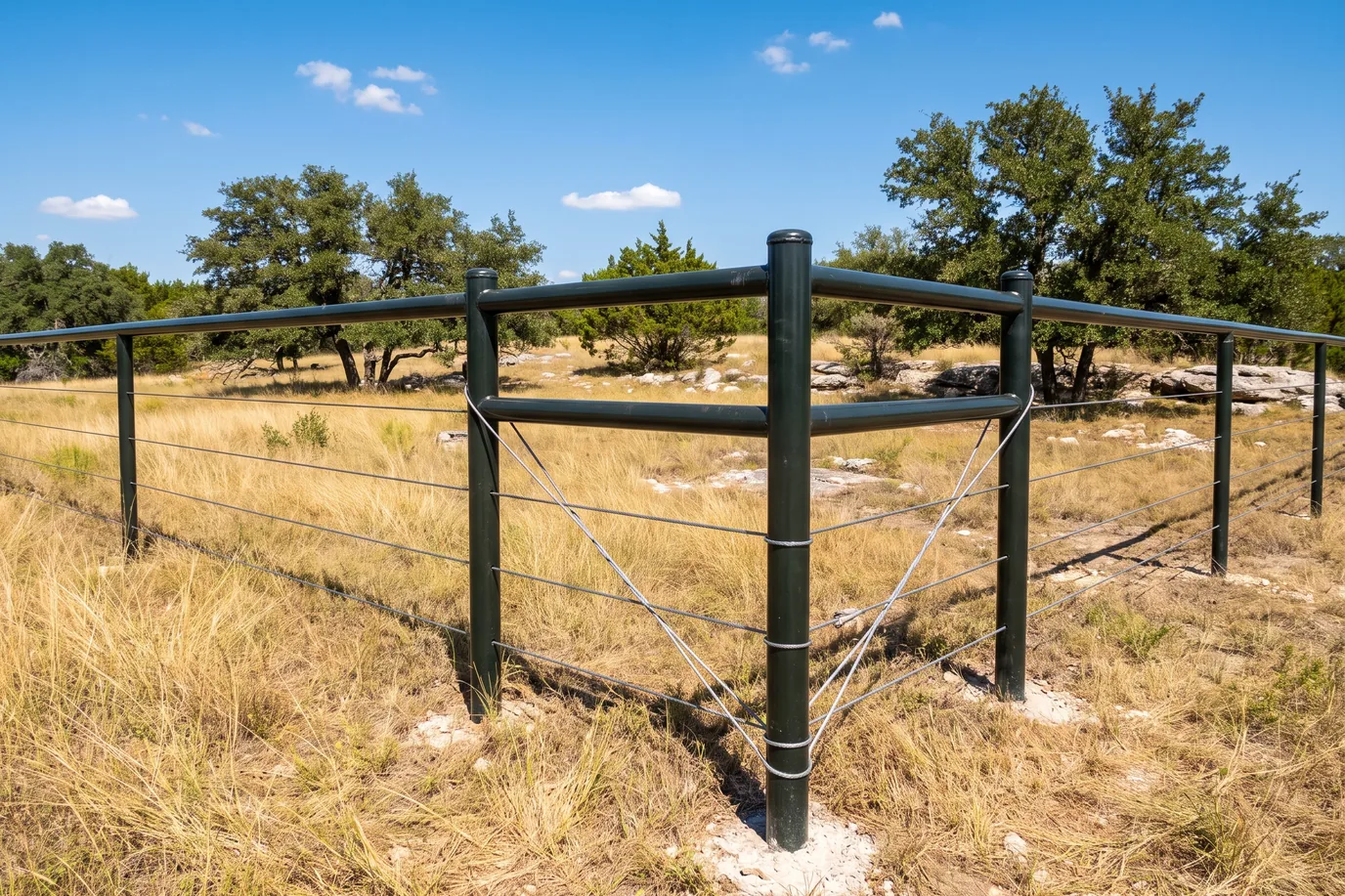
Steel pipe posts carry a pipe top rail and tight cable runs, with braced assemblies at the corners and gates.
A wood privacy fence has several parts, and each one has a job. Most of those parts sit on the inside face of the fence, the side you see from your yard.

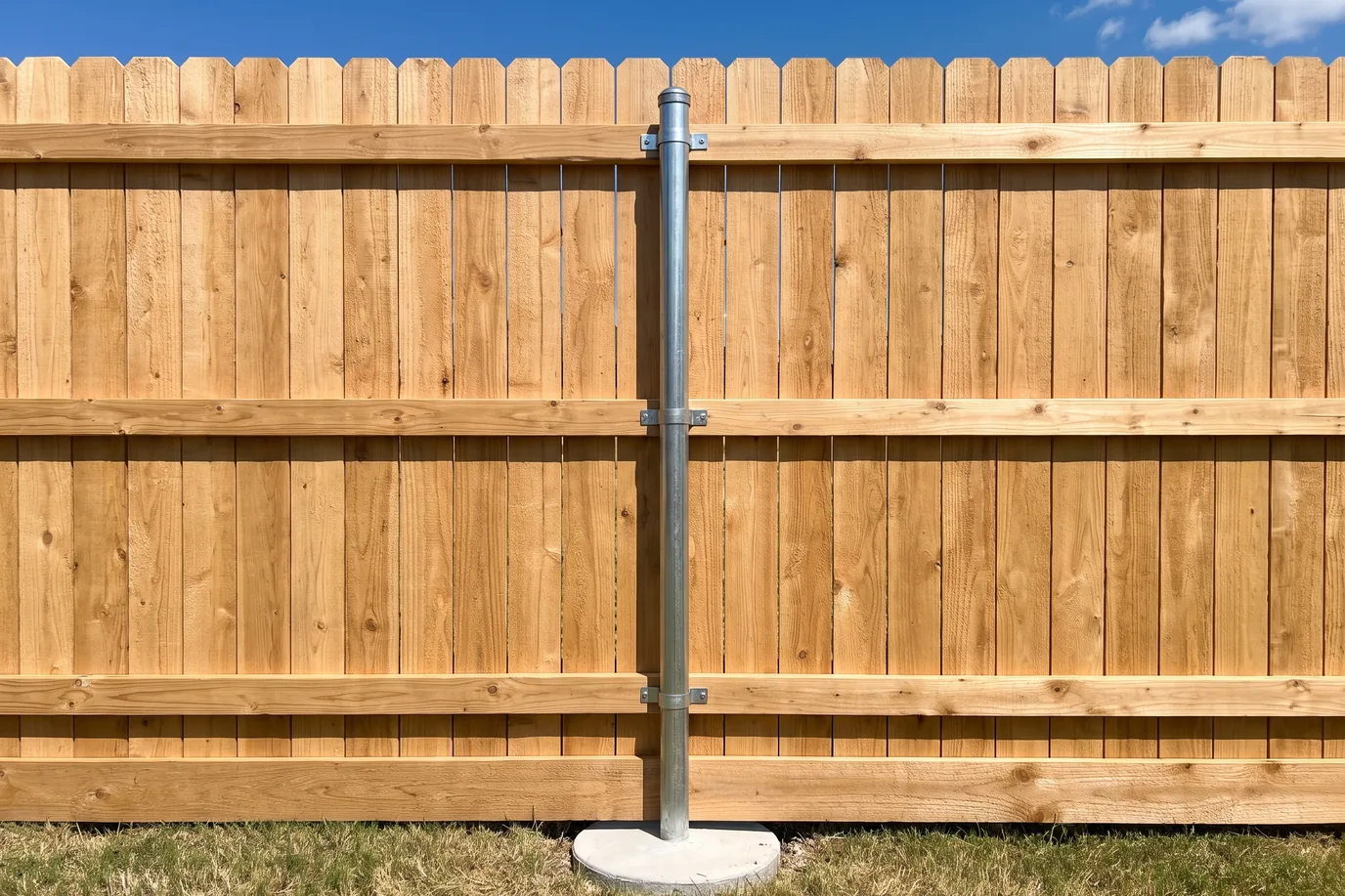
We set galvanized steel or cedar posts plumb in concrete, so the fence line stays straight.
Horizontal rails run between the posts on the inside face, and the pickets fasten to them.
Each picket’s finished face points out toward the street or the neighbors.
A board along the bottom keeps pickets up off the soil, where fence wood stays wet longest.
A flat cap board across the top covers the picket ends, with a narrow trim board under it.
We use heavy hinges and a latch that lines up, and a drop rod holds one leaf of a double gate.
Most fence jobs follow the same four steps, from your first message through the work and hauling off the scraps.
Get a quote
Use the quote form to tell us where the fence goes and what kind of fence you have in mind.
We walk and measure the fence line, noting the slope, the gates, and anything in the way. Then you get a written quote.
Buried utility lines get marked before anyone digs. We set the posts in concrete, plumb and on a string line.
We put on the rails, pickets, kickboard, cap, and gates. We also take out the old fence and haul it off with the scraps.
We build and repair fences in Austin and the towns around it in Travis, Williamson, and Hays counties, including ranch fencing on acreage in those counties. If your town isn’t listed, ask us anyway.
See the service areaPlain answers cover fence prices, the City of Austin’s rules, and fence posts, with a named source for every figure and rule.
Angi’s published Austin fence installation and chain link figures, its national ranges by material, and what pushes a price up.
When a fence needs a City of Austin permit, how tall it can be, and what HOAs can and can’t do.
The Forest Products Laboratory identifies which woods resist rot in the ground, with a comparison to galvanized steel posts.
Austin City Code § 25-2-899 limits a solid fence on a property line in the City of Austin to 6 feet from natural grade and allows 7 or 8 feet only in the cases it lists. Other cities and HOAs set their own rules. Our guide to fence height and permit rules in Austin lists those cases in full.
City of Austin Development Services says a fence in the City of Austin needs a permit if it’s in a floodplain, more than 7 feet high at any point, or more than 6 feet high on residential property along a public right-of-way other than an alley. It says a fence that needs no permit still has to follow the City’s fence rules. Our guide has the City’s full fence rules.
We build wood fences on galvanized steel or cedar posts, and we set the posts in concrete. Our guide compares cedar, pine, and steel posts.
If your new cedar fence will get paint or another film-forming finish, the Forest Products Laboratory’s Wood Handbook (2021) says to finish it as soon as possible after installation. The same handbook calls semitransparent penetrating stain an excellent finish for weathered wood, and we handle fence staining and sealing.
Yes, we can build a fence on a slope. The fence can step down in level sections or follow the ground, and we’ll show you which approach suits your yard when we measure.
Yes, our fence repair and replacement work includes taking out and hauling off the old fence as part of a replacement.